You win a client on Monday. They go live on Monday.
Worknaut is case management for firms that run HR for other companies. Connect the channels a new client already uses, and their employees are supported the same day.
Request a demo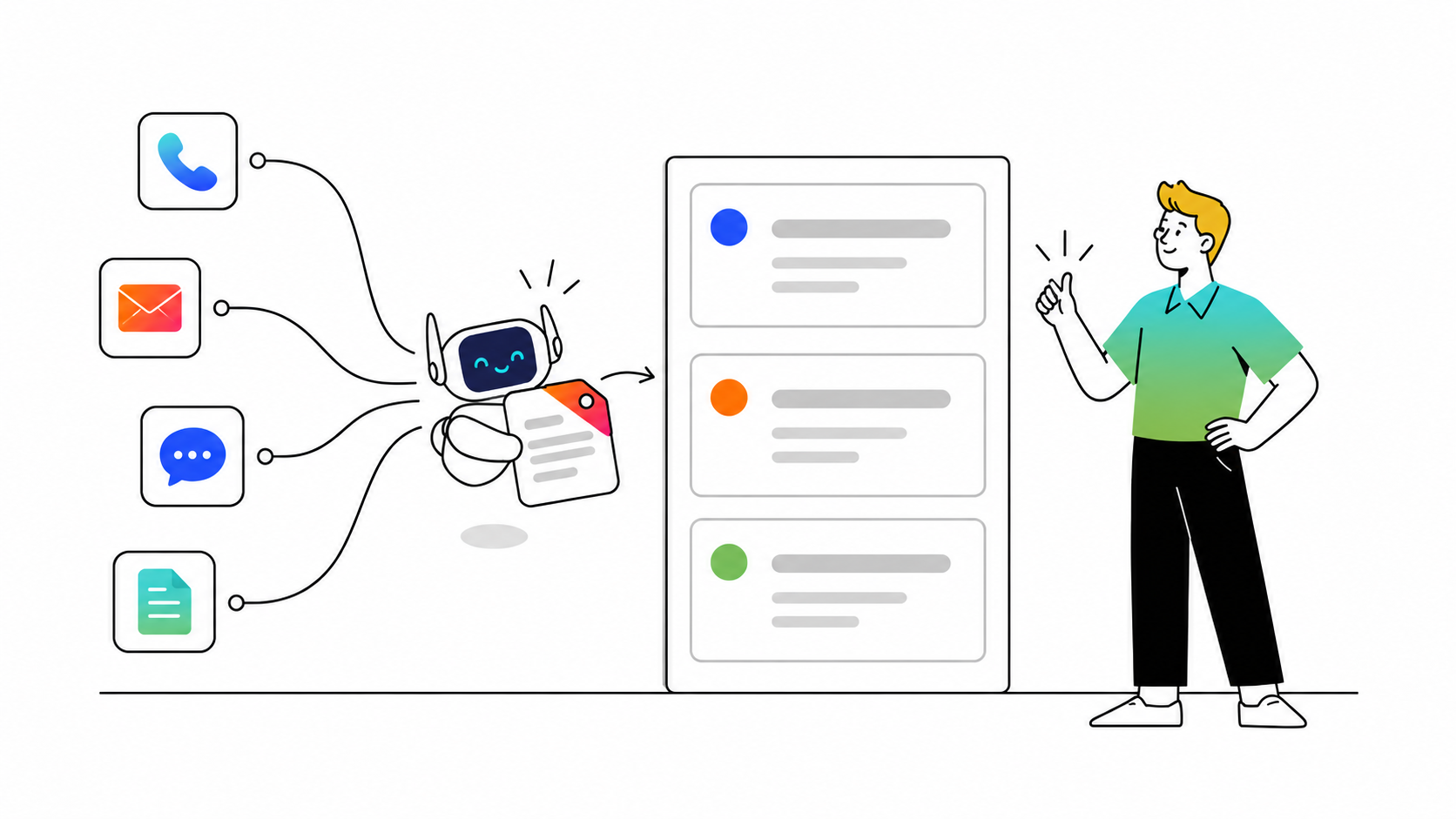
Your clients are separate companies. Your tools think they are one.
Every help desk on the market was built for a company supporting its own employees. You support several companies' employees, and the gap shows up everywhere.
Requests arrive wherever people already write
Phone, email and messaging split one client's work across places that do not talk to each other. The full picture lives in whoever happened to handle it.
Client work stays fragmented
Separate accounts, separate logins, separate context. Someone switches between them all day, and the client's history never sits in one place.
Every client runs on its own calendar
Pay dates, cycles and policies differ by client. Nothing lines them up, so errors are a matter of time.
None of this is a discipline problem. You are running several companies out of tools that were designed for one.
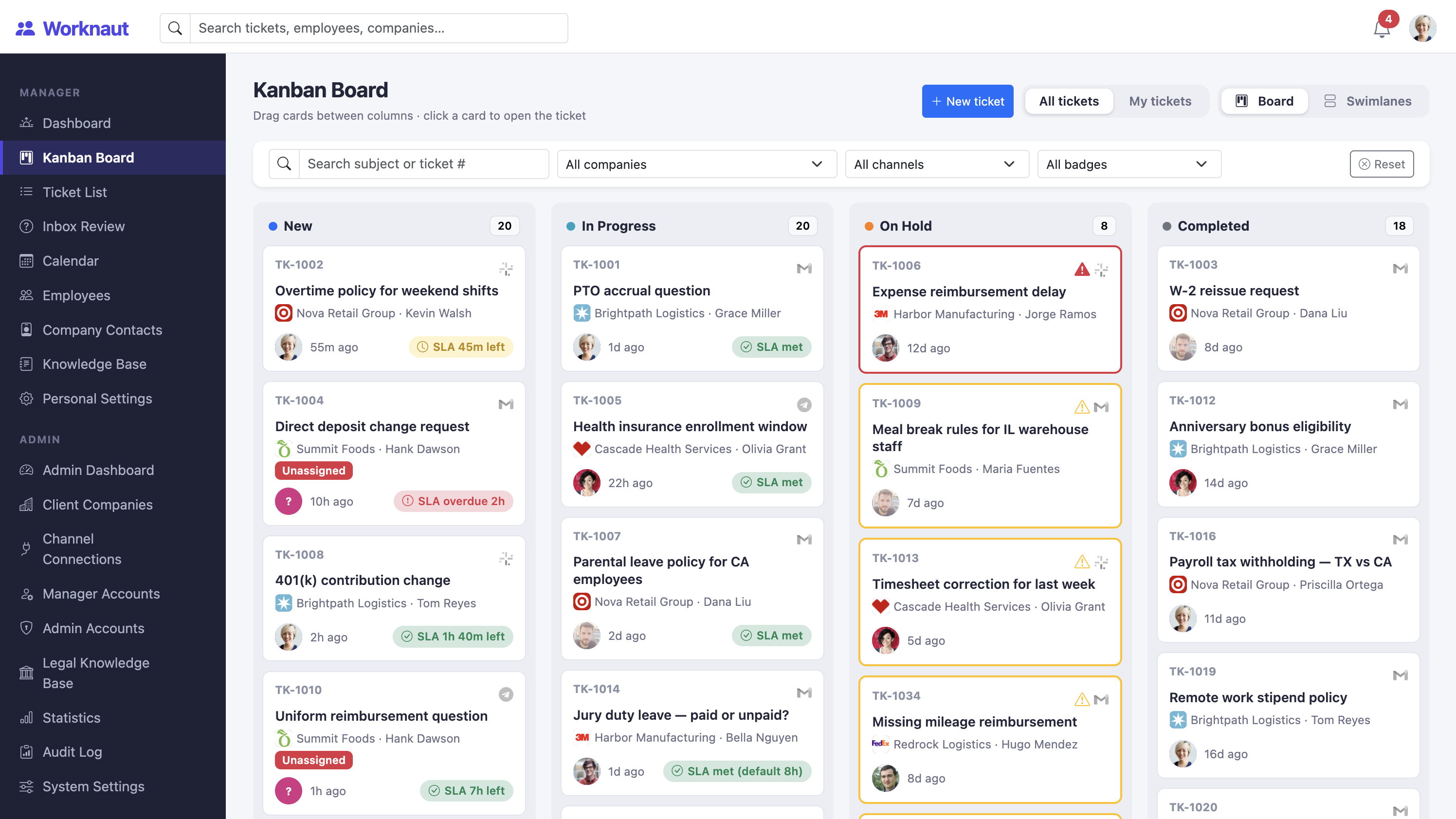
Every request becomes a Case.
One Case follows the request through to resolution and belongs to a single client. Inside it sit the people, the work, and the record.
Belongs to a single client
It takes requests where they already land.
Connect the client's existing channels. Their employees keep writing where they have always written, and every message arrives as a Case with an owner, a status and a clock.
It keeps each client behind its own wall.
A Case belongs to exactly one client. Routing, permissions, SLA and what the AI is allowed to read all follow from the client record. Nothing crosses over.
It drafts the answer with the source attached.
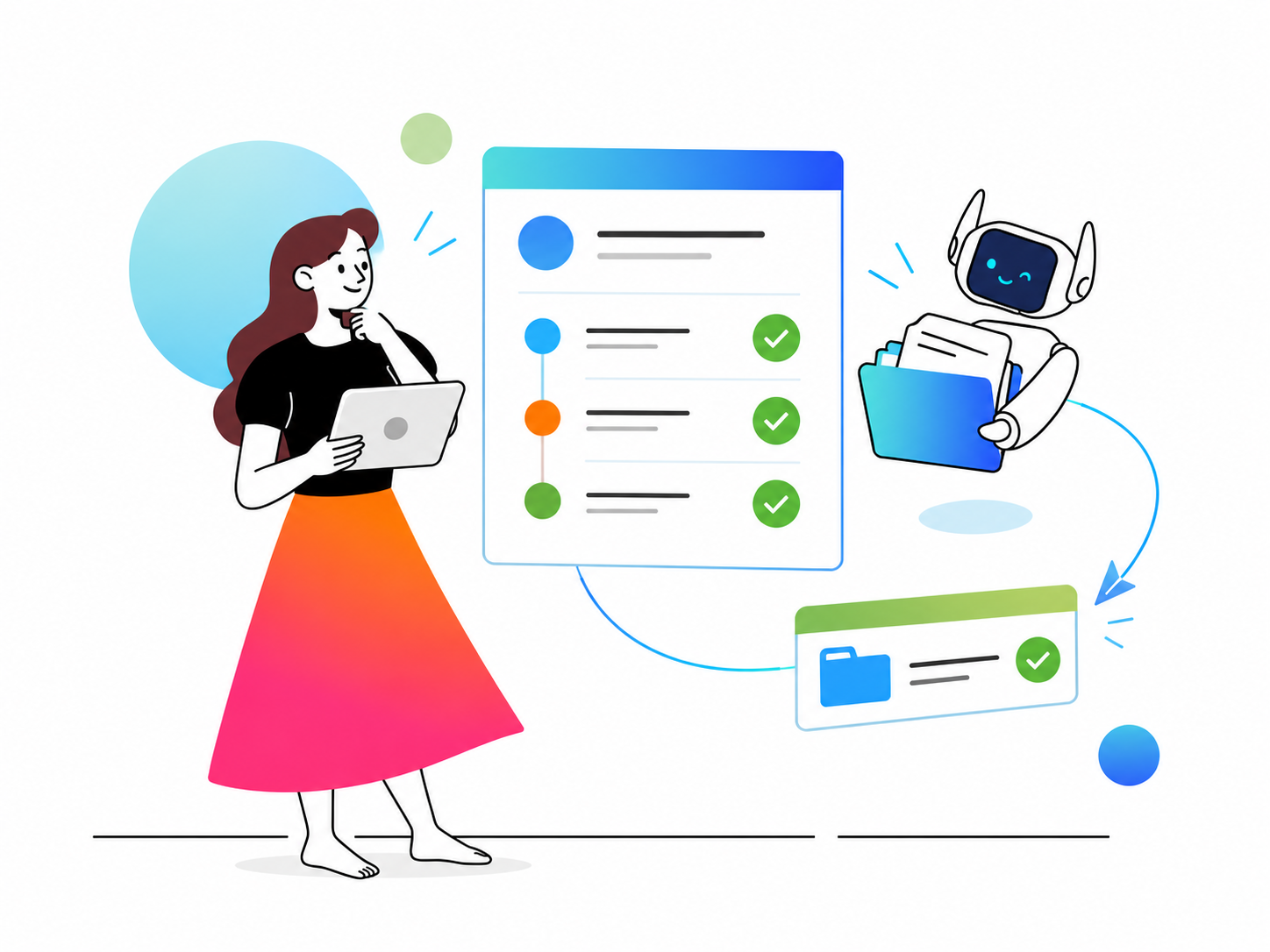
Worknaut gathers the client's own policy, the history and the legal sources, and drafts the reply with the rule it used. A manager approves it before it sends.
Direct deposit change request
Summit Foods· Hank Dawson
Meal break rules for IL warehouse staff
Summit Foods· Maria Fuentes
Any tool can be configured to do this. Configuration is a project.
The multi client model is not impossible elsewhere. It is a build. Someone has to design the mapping between a person who wrote in and the right client's employment record, then maintain it as clients come and go. That work lands on the firm, not the vendor.
So the cost of a new client is not the license. It is the weeks between winning the account and the first request being answered properly.
There is a second cost that grows in the wrong direction. Tools priced per employee served charge you more every time a client hires. Growth becomes a line item instead of a result.
Worknaut ships multi client as the default. A new client is a connection, not a build.
What changes when the structure already fits
Nothing slips through
Phone, messenger and documents land in the same Case. The record stays even after the owner changes.
Clients are the structure
Add a client once and routing, policy and context follow. Onboarding is a connection, not a project.
Resolution, automated
Worknaut gathers the client details, policy, history and sources. You review and decide instead of searching.
One client never sees another
Every Case, document and conversation belongs to a single client, and that boundary governs what your team sees and what the AI is allowed to read. Public legal sources are shared across clients. Client documents never are. Every action is recorded, and nothing goes out to an employee until a manager approves it.
The same problem, on the other side of the bill
Skyli builds systems that hold one party's interests when the other party controls the record. On the consumer side that means reading a bill nobody else will check. Here it means holding several clients' HR work in one place without letting any of it leak into another. Worknaut is built and operated by the same team.
Questions firms ask first
No. They keep using the channel they already use. The Case is created on your side.
See a client go live
Book a walkthrough with the team that built it. Twenty minutes, your own client scenario.